
Introduction

The arid and semi-arid Middle East and North Africa (MENA) region is among the most vulnerable in the world to climate change, not only due to the physical impacts of these changes but also because of their implications for the stability and security of an already volatile region.
The region is expected to experience a sharp increase in temperature and a decline in precipitation, alongside more frequent, prolonged, and intense heat waves – leading to increasingly severe and recurrent droughts
Water scarcity, food insecurity, the adverse effects of rising temperatures on public health and agricultural productivity, and massive population movements will exacerbate chronic instability, harming both nature and settlement areas, as well as the population.
Vulnerable countries are those that are already coping with extreme events from the past decade, such as the impacts of COVID-19, as well as long-term trends, including declining oil demand. In light of this, the IPCC estimates that if global greenhouse gas emissions do not decrease significantly, large parts of the region will become uninhabitable by the end of the century – and likely much earlier.
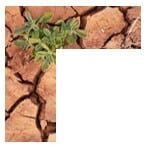
Desertification: Definition, Causes, and Regional Implications
Desertification is defined as a process in which land in arid, semi-arid, and dry sub-humid areas transforms from fertile regions into barren desert-like zones as a result of a combination of natural processes and human activities.
Desertification differs from the expansion of existing deserts; it refers to the gradual degradation of land, including the loss of fertility and productive capacity, rather than a geographic spread of desert areas
Several key processes occur during desertification:
- Soil degradation, including loss of soil fertility, erosion, salinization, and compaction
- Decline in vegetation cover, disrupting ecological balance, biodiversity, and habitat availability
- Changes in the water cycle, potentially leading to reduced groundwater recharge and increased evaporation
The main drivers of land degradation in these areas are:
 Climatic factors: Drought and changes in precipitation lead to water scarcity, reduced vegetation cover, and lower soil moisture. Rising temperatures increase evaporation and worsen soil dryness.
 Land use changes: Deforestation leads to soil instability, increased erosion, and disruption of the hydrological cycle. Overgrazing removes vegetation, compacts the soil, and intensifies erosion..
 Unsustainable agricultural practices: Monoculture and intensive farming accelerate desertification due to nutrient depletion in the soil, which reduces fertility and increases erosion vulnerability. Inefficient water management methods lead to soil salinization, particularly in areas with high evaporation rates..
 Urbanization and industrialization: Urban expansion and soil sealing prevent water infiltration into the ground, leading to increased surface runoff that can contribute to the process of desertification. Industrial activities degrade soil quality and biodiversity, reducing the soil’s capacity to support agriculture and ecosystems.
 Social factors: Population growth pressures communities to exploit land unsustainably, leading to erosion, loss of fertility, and the degradation of ecological systems.
Impacts of Desertification Processes
 Impacts on the natural environment:
- Damage and even destruction of ecosystems. Desertification leads to the loss of biodiversity, primarily due to an increased rate of species extinction. Biodiversity loss can reach up to 20% over several decades, potentially triggering a chain reaction that harms the biological food web.
- Land degradation due to intensified wind erosion and loss of organic matter. Wind erosion removes the fertile topsoil layers, making it harder for plants to regenerate, dries out the soil, breaks down its structure, and makes it more vulnerable. This creates a negative feedback loop of disrupted nutrient cycles, which exacerbates desertification, particularly in agricultural areas where the soil struggles to sustain crop growth.
- Desertification affects the soil’s water balance and disrupts the hydrological cycle. Water infiltration into the soil is reduced, the soil’s water retention capacity is impaired, and this leads to the inability of the soil to maintain both moisture and permeability. As a result, surface runoff increases, raising the risk of flash floods and accelerated soil erosion. At the same time, due to the lack of water absorption, groundwater recharge declines, leading to lower water availability during dry periods.
- Changes in water balance affect the local microclimate. Loss of plant cover reduces evaporation and transpiration (the process by which water is lost from plants), causes rising temperatures, and disrupts humidity regulation. These factors intensify soil drying and create negative feedback loops.
Impacts on the Human Environment
- The food security of those living in developing areas is harmed due to the loss of soil fertility by approximately 30–50%, and pastoralist communities are also affected: the decline in fertile land harms livestock health, which reduces their productivity. This worsens economic and nutritional problems in communities that rely on this sector.
- Desertification has dramatic effects on human health. Wind erosion has severe health impacts due to dust emissions and declining air quality. When soils lose their natural vegetation, they become more susceptible to erosion, which can lead to widespread dust storms. These storms carry airborne particles that impair respiration in living beings. The storms travel thousands of kilometers, reach populated areas, and affect air quality. Additionally, there is a health risk due to nutritional deficiencies and infectious diseases. Crop damage leads to undernutrition, particularly among vulnerable populations, including children, pregnant women, and the elderly. A decline in water sources leads to the use of contaminated water, exposing communities to diseases such as cholera, dysentery, and diarrhea.
- Desertification poses a threat to the economies of rural regions, as damage to agricultural yields intensifies poverty among local populations, especially those dependent on the agricultural sector for their livelihood. Communities living in areas affected by desertification fall below the poverty line and suffer from increased food insecurity, leading to food imports and further worsening of their economic condition.
- Loss of agricultural jobs. When farmers fail to produce a sufficient yield, they often abandon their occupation and sometimes migrate in search of alternative income, thereby increasing pressure on urban areas. Additionally, the gross national product of countries that rely heavily on agricultural output is negatively impacted. Furthermore, desertification incurs national costs, including compensation for farmers, support for populations, land rehabilitation, and other expenses.
- Intensification of existing social conflicts and emergence of new ones. Disputes over land and water use rights, as well as the shortage of these resources, can lead to conflicts between communities. Environmental degradation fuels migration, loss of identity, and the disintegration of communities. “Climate refugees” are common in regions severely affected by desertification.
Table 1: Key Characteristics, Drivers, and Consequences of Desertification
| Desertification Process | Causes | First-Order Outcomes | Second-Order Outcomes |
|---|---|---|---|
| Land degradation | Drought, changes in climate | Destruction and damage to ecosystems | Harm to food security |
| Loss of vegetation | Rising temperatures | Land degradation | Worsening rural poverty and migration to cities |
| Hydrological changes | Deforestation | Disruption of the water cycle | Job loss |
| Overgrazing | Increase in dust storms | Increased health risks | |
| Monoculture and intensified grazing | Decrease in crop and livestock productivity | Conflicts and competition over resources | |
| Inefficient irrigation methods | Economic costs of rehabilitation and protection | ||
| Soil sealing as part of urbanization | |||
| Industrial pollution | |||
| Population pressure |
Bioconvergence Technologies
The principle of convergence presents a pioneering and holistic approach to problem-solving, integrating knowledge from the life sciences, physics, mathematics, computer science, and engineering. This principle connects diverse fields, enabling mutual enrichment and innovation. Bioconvergence (BC) is based on this principle and offers a holistic research and technological framework that transcends traditional boundaries, emphasizing the importance of interdisciplinary collaboration. Bioconvergence merges biological systems with non-biological systems, leveraging breakthroughs in various domains to design, improve, or innovate systems that harness the properties of living organisms. This synergy generates solutions to challenges in health, agriculture, environmental sustainability, and other areas.
Applying Bioconvergence to Combat Desertification
Climate change, as a complex and evolving global challenge, requires flexible, sustainable, efficient, and multidisciplinary solutions. Bioconvergence, which combines biology with engineering, digital technologies, and physics, embodies these characteristics, making it a particularly suitable strategy to address the urgent issues posed by climate change. By integrating biological systems with technological innovation, bioconvergence provides transformative approaches for mitigating the effects of climate change and adapting to its consequences. Biological systems, which have evolved, serve as a foundation for climate innovation due to their flexible responses to environmental changes. Bioconvergence technologies reflect this flexibility while maintaining sustainability and energy efficiency.
Bioconvergence and the Drivers of Desertification Processes
Deforestation:
Bioconvergence can help prevent soil erosion caused by deforestation through the integration of biological technologies, engineering, and digital technologies.
Bioprinting: Bioprinting technologies can be used to create artificial root systems or nature-inspired materials that mimic the stabilizing effects of trees in an ecosystem. For example, bioprinted root systems can be placed in deforested areas to stabilize the soil and reduce erosion while new vegetation grows.
Overgrazing and monoculture:
Cultivated meat can reduce dependency on livestock agriculture, ease overgrazing, and promote vegetation recovery in degraded areas.
Inefficient irrigation methods:
Biological nanotechnology and microfluidics can revolutionize irrigation by enabling systems that deliver water with maximum precision, minimize waste, and prevent soil salinization.
Addressing First-Order Outcomes of Desertification Through Bioconvergence
As desertification progresses, it leads to first-order outcomes, including ecosystem destruction, land degradation, disruption of the water cycle, increased dust storms, and reduced agricultural productivity. Bioconvergence technologies can help address these impacts by restoring ecosystems, improving soil health, and enhancing agricultural practices.
Destruction and Damage to Ecosystems:
Relevant technologies for addressing this challenge:
- Bioremediation and Synthetic Biology: Bioremediation is a process that utilizes engineered organisms, such as bacteria, fungi, and plants, to restore damaged ecosystems. Advanced synthetic biology technologies enable the engineering of microorganisms and plants to more effectively break down pollutants, such as heavy metals, petroleum, and industrial chemicals. The integration of these technologies can enhance the simultaneous breakdown of multiple contaminants and promote rapid recovery of ecosystems. For example, engineered rhizobacteria can bind to plant roots, strengthening the plant’s ability to absorb nutrients from the soil while simultaneously degrading pollutants. Additionally, microorganisms can be engineered to produce enzymes that break down toxic compounds such as pesticides, restoring soil for proper agricultural use.
Finally, engineering the plants themselves can improve their ability to absorb and convert pollutants into harmless substances. For instance, plants can be modified to express genes that break down toxic organic compounds, incorporating metabolic networks that allow the use of pollutants as energy sources. In this way, plants can not only clean the soil but also support its regeneration by promoting the conservation of essential nutrients.
- Organ-on-a-Chip Technologies and AI-Based Biological Models: These technologies can be used to model ecosystems at high resolution. Using sensors and real-time data, it is possible to simulate and predict how plants and microorganisms respond to environmental changes, such as the introduction of new species or shifts in the soil’s nutrient balance. These models can also aid in analyzing the impact of factors such as rainfall, temperature, and soil type on the success of ecological restoration.
Land Degradation:
The following bioconvergence technologies may help address soil erosion and the loss of organic matter:
- Bioprinting: Printing complex structures that mimic the physical and chemical properties of healthy soils. Features such as porosity, water absorption, and nutrient management capabilities can be replicated using bioprinted materials, enabling the restoration of damaged areas.
- Self-healing materials: The integration of biological materials can be used to create structures within the soil that repair damage caused by erosion, thereby maintaining soil stability and preventing further degradation; alternatively, such materials can be embedded in weakened soils to improve soil cohesion.
- Metabolic engineering and bioremediation: See “Bioremediation and Synthetic Biology” in the section on the destruction and damage to ecosystems.
Disruption of the Water Cycle:
The combination of biological nanotechnology and microfluidics enables the development of irrigation systems that provide precise control over water flow, based on real-time analysis of soil moisture data, climate, and plant stress levels, using microscopic sensors. These technologies can also help prevent soil erosion and reduce flood damage by regulating water flow.
Increase in Dust Storms:
Carbon Nanotubes (CNTs) and two-dimensional materials, such as graphene, offer advantages for soil preservation and reducing dust erosion in arid regions. Carbon nanotubes exhibit exceptional mechanical strength, flexibility, and durability, allowing their integration into coatings designed to stabilize soil. Graphene, as a two-dimensional material with conductive and resilient properties, can be used in smart barriers that prevent the spread of airborne dust. The unique molecular properties of these materials make them ideal for enhancing soil adhesion and preventing erosion caused by extreme wind conditions. These barriers can be integrated with biological sensors that monitor soil and dust conditions in real-time, helping to avoid early-stage environmental degradation.
Reduced Agricultural and Livestock Productivity:
As previously discussed, cultivated meat helps reduce dependence on traditional livestock agriculture, thus addressing the environmental impacts of overgrazing and allowing degraded soils to recover and regain their agricultural potential.
Table 2: Technology Readiness Assessment of Bioconvergence Technologies in the Context of Desertification Drivers
The readiness assessment is based on studies referenced in this review.
| Technology | Desertification Challenge | TRL | Explanation |
|---|---|---|---|
| Bioprinting for artificial root systems to control soil erosion | Engineering of trees and plants for rapid growth and resilience | 3-4 | Demonstrated in controlled environments, but field trials are limited – barriers: long-term field testing for effectiveness and ecological impact, unintended consequences, production scaling. |
| Cultivated meat | Reducing dependence on livestock agriculture and overgrazing | 6-7 | Commercially available on a small scale. Barriers include cost reduction, consumer acceptance, scaling production to meet demand, and the development of sustainable manufacturing methods. |
| Nanotechnology and microfluidics for precision irrigation | Efficient water supply, salinization prevention | 5-6 | Prototypes were developed and field-tested. Barriers include cost-effectiveness for large-scale deployment, sensor durability and maintenance under field conditions, and integration with existing irrigation infrastructure. |
| Bioremediation and synthetic biology for ecosystem restoration | Restoration of degraded ecosystems, pollutant removal | 4-5 | Successful in controlled environments. Barriers include effectiveness in diverse ecosystems, unintended consequences of engineered organisms, scalability, and high costs for widespread application. |
| Organ-on-a-chip and AI for ecosystem modeling | Simulation of ecosystem responses to change | 2-3 | Primarily used in medicine, ecological applications are in their early stages, with barriers including adapting technology to environmental use, developing complex models, and validating model predictions. |
| Bioprinting and self-healing materials for soil restoration | Restoration of soil structure and function | 2-3 | Early-stage research with potential. Barriers: material development, scaling, and cost-effectiveness for field use, durability, and integration with natural soil processes. |
| Nanomaterials to prevent dust storms | Soil stabilization, reducing wind erosion | 3-4 | Laboratory demonstrations of improved soil properties. Barriers include the cost-effective large-scale production of nanomaterials, long-term environmental impact, and practical implementation strategies. |
Barriers
Alongside the significant potential of bioconvergence technologies to address the causes and impacts of desertification, several important barriers must be considered:
- Biological and ecological complexity: Ecosystems targeted by bioremediation are inherently complex, with numerous and often unpredictable interactions. The genetic engineering of a single organism may cause unforeseen changes in entire ecosystems.
- Technological limitations at large scale: Technologies such as bioprinting or nanotechnology perform well in controlled environments, but scaling up to large-scale applications poses a significant challenge. Dispersing nanomaterials for soil stabilization across vast areas is also a complex process that raises questions about technical and economic feasibility. Furthermore, each geographic region may present unique soil, climate, and ecological conditions, requiring specific adaptation of solutions.
- Safety concerns and ecological risks: The use of advanced technologies raises worries regarding safety and environmental impact. Nanomaterials may be toxic to certain organisms, accumulate in biological systems, and cause unexpected side effects.
- Energy and infrastructure constraints: Many of the proposed technologies, such as advanced irrigation systems or biological sensors, require stable energy supplies and advanced communication networks. In remote or developing regions, where desertification is particularly severe, such infrastructure may be scarce or absent. Solutions like solar energy or satellite communication networks may be costly or impractical at a large scale.
- High costs and economic limitations: Developing technologies such as bioprinting or cultivated meat requires substantial investments of time and money in research and infrastructure. Developing countries may struggle to afford the high costs associated with creating and deploying such advanced technologies.
- Integration and system management challenges: Complex solutions, such as integrating biological sensors with advanced irrigation systems, require sophisticated management and technological infrastructure. Moreover, solutions based on complex biological systems require ongoing maintenance and monitoring. In desertification-affected areas, infrastructure development and upkeep are not always feasible, casting doubt on the practicality of implementing such solutions.
- Intellectual property and knowledge-sharing challenges: Advanced bioconvergence technologies are often protected by patents, which can limit their dissemination and use, especially in developing countries. Additionally, the technical knowledge required to implement and maintain these technologies may be concentrated in a small number of institutions or companies, making widespread adoption more challenging.
- Cultural and social resistance: Cultural or social opposition to innovative technologies can be a significant obstacle to implementation. The adoption of new technologies requires not only technical solutions but also bridging cultural gaps and conducting comprehensive public outreach.
Recommendations for the Future
To address these challenges and maximize the potential of bioconvergence technologies, it is essential to develop a strategic investment roadmap that weighs the urgency of needs, potential impact, and technological readiness. Rather than focusing on a specific technology or need, it is recommended to adopt an approach based on clusters of investment areas – groupings that combine high-impact potential with suitable levels of technological maturity.

The first cluster focuses on highly urgent needs and technologies with medium to high Technology Readiness Levels (TRL), such as the development of cultivated meat. Investment in this area would improve food security and offer a relatively immediate response to desertification challenges. Priorities should include reducing production costs, scaling up manufacturing, and advancing safety research.
The second cluster addresses moderately urgent needs and technologies with medium TRL levels, such as nanotechnology and microfluidics for plant stress reduction, and bioremediation for ecosystem restoration. Investment in these areas will enhance water-use efficiency, prevent soil salinization, and support the recovery of desertified regions. Efforts should focus on developing and scaling up technology while addressing technical, economic, and regulatory barriers. Collaboration between research institutions, industry, and farmers should be promoted for successful field implementation.
The third cluster targets highly urgent needs but includes technologies with low TRL, such as bioprinting and self-healing materials for soil restoration. Although these technologies are still in early development stages, they offer significant long-term potential for addressing desertification. Investment in R&D in these areas will enable technological maturation and lay the groundwork for future applications, while positioning Israel at the forefront of technological and scientific innovation.
Table 3: Technology Investment Clusters for Addressing Desertification Processes
| Investment Clusters | TRL | Impact Potential | Need Urgency | Investment Recommendations |
|---|---|---|---|---|
| Technologies ready for immediate deployment | Medium–High (6-7) | High | High | Scale up deployment, reduce costs, and promote regulatory support |
| Technologies with moderate urgency and maturity | Medium (4-6) | Medium–High | Medium | Development and application expansion, environmental impact assessment |
| Promising long-term technologies | Low (2-4) | High | High | Invest in R&D, build infrastructure for future implementation |
This roadmap presents a balanced investment approach, focusing on advancing technologies with high-impact potential while considering technological maturity and the urgency of needs. By investing in these clusters, Israel can leverage its comparative advantages in the bioconvergence domain to address desertification challenges and contribute to national resilience. In addition, implementing these technologies may strengthen Israel’s international position as a hub for innovation and environmental technology solutions, creating opportunities for regional and global collaboration.
Conclusion
Combating desertification is a significant challenge for Israel, situated in one of the world’s most climate-vulnerable regions. Desertification is not only an environmental issue but also a threat that affects national security and socioeconomic resilience, as it leads to land degradation, loss of fertility, damage to ecosystems, and exacerbates existing problems such as poverty, political instability, and social unrest.
Bioconvergence technologies offer significant potential in addressing desertification. First, by improving food security. Second, by developing sustainable cultivation systems that enhance soil health and crop diversity. Third, by reducing dependence on livestock agriculture, decreasing overgrazing, and freeing up land for restoration and regeneration. Additionally, precision and efficient irrigation systems can prevent soil salinization and enhance water-use efficiency.
However, there are barriers to implementing these technologies. The ecological complexity of natural systems may lead to unforeseen consequences and affect entire ecosystems. Some technologies succeed in the lab but face difficulties in large-scale deployment. Safety concerns, regulatory and ethical limitations, and high costs present further challenges. System integration and management hurdles, along with social resistance, may also delay the adoption and implementation of innovative solutions.
To overcome these challenges and maximize the potential of these technologies, a strategic investment roadmap is proposed:
- Immediate response – investment in high-urgency needs and technologies with medium-to-high readiness
- Improving water efficiency, preventing soil salinization, and restoring affected areas – investment in medium-urgency needs and medium-maturity technologies
- Early-stage technologies with long-term potential – investment in high-urgency needs and low-readiness technologies.
* All information provided in this article is correct as of the date of writing and according to the data available to the author. The Innovation Authority, or anyone acting on its behalf, is not responsible for the accuracy, truthfulness, or precision of the data, in whole or in part. The article is published for the public’s benefit, and no commercial use should be made of it, including for its sale, distribution, or presentation.
** This article contains links to external websites. The Authority has no control over the information, details, or data presented on these sites, and any reference to them should not be interpreted as a recommendation, endorsement, or preference regarding the information, content, or services published therein. The Authority bears no responsibility for the content of these websites or for reliance on the information they contain.